As generative AI and agentic AI capabilities continue to expand to edge devices, on-device AI applications are rapidly progressing from technical validation to product development and commercialization. For developers, the challenge is no longer simply getting AI models to run, but identifying the right models and computing platforms, completing model adaptation and performance optimization, and ultimately integrating AI capabilities into real-world products.
Qualcomm Technologies recently launched Qualcomm AI Hub China, providing Chinese developers with localized model resources, development tools, performance benchmarking, and on-device deployment support. The platform currently offers nearly 230 optimized AI models, including models from Qwen, Tencent Hunyuan, ModelBest, and China Telecom's Xingchen, supported by a localized developer ecosystem to accelerate on-device AI development and adoption.
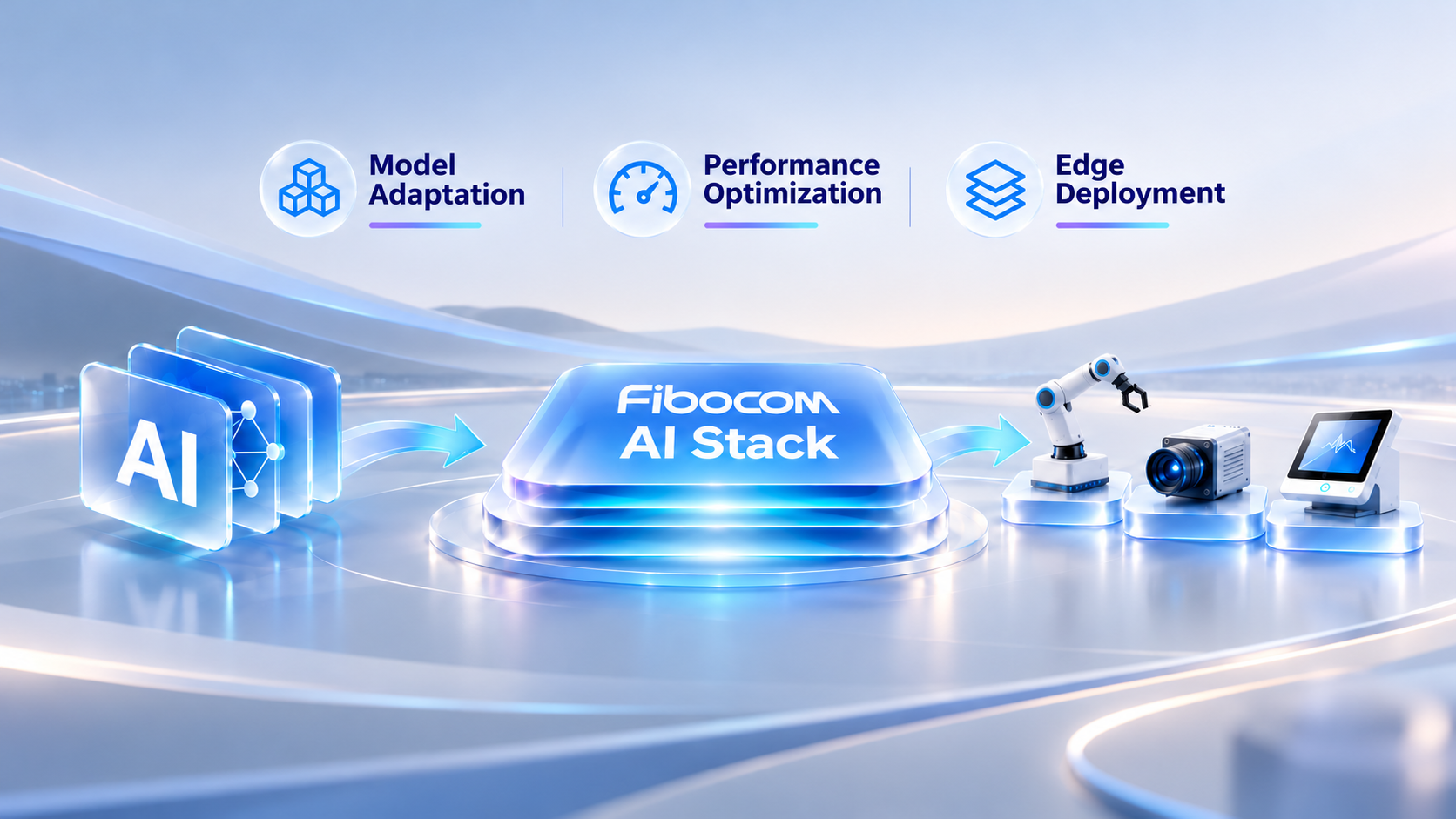
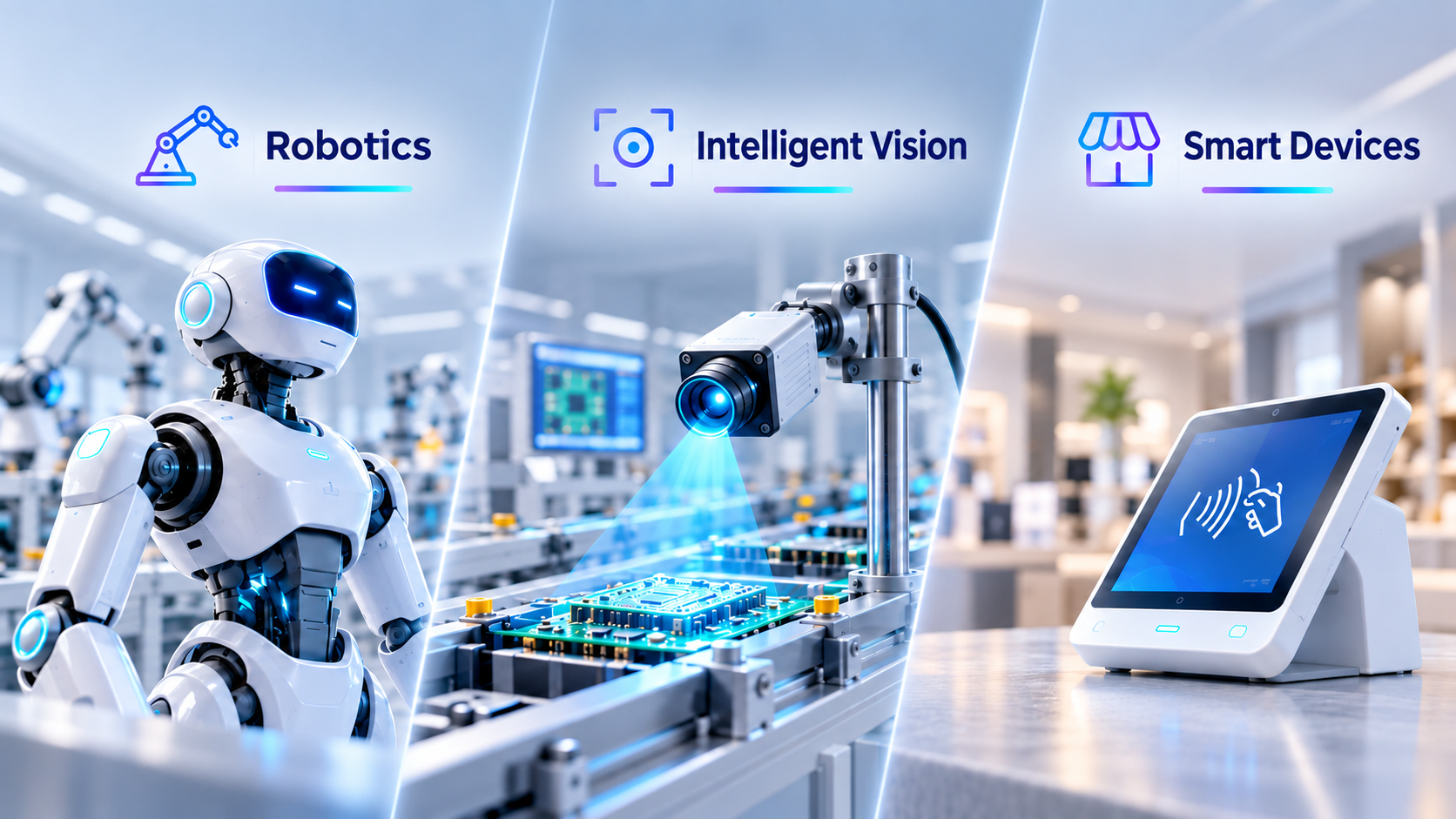
Fibocom has already incorporated selected software capabilities from Qualcomm AI Hub into its on-device AI development workflows, combining them with its proprietary Fibocom AI Stack platform for model adaptation, performance optimization, and device deployment. With the launch of Qualcomm AI Hub China, Fibocom aims to further expand Fibocom AI Stack's compatibility with mainstream AI models and Qualcomm platforms, enabling more efficient development of on-device AI applications in robotics, intelligent vision, and other fields.
Accelerating AI Model Selection and Evaluation
On-device AI products have specific requirements for computing power, memory, power consumption, and response time. The same AI model may perform differently across hardware platforms, making it essential for development teams to evaluate model-platform compatibility early in the development process.
Qualcomm AI Hub provides optimized model resources and benchmark results across supported hardware platforms. Developers can evaluate metrics such as latency, memory usage, throughput, and power consumption to assess the suitability of different models for their target platforms before proceeding with adaptation, improving model selection efficiency.
For Fibocom's proprietary models, benchmark results from comparable models available on AI Hub also provide useful performance references, helping development teams identify optimization opportunities and establish performance targets.
Leveraging selected AI Hub capabilities, Fibocom has conducted model evaluations and advanced on-device deployment validation through Fibocom AI Stack. In robotics applications, its development teams have explored deploying embodied AI models, including Pi 0.5 and NVIDIA GR00T N1.5, on Qualcomm platforms.
By applying optimization techniques such as mixed-precision quantization and visual token compression within Fibocom AI Stack, the teams have reduced the computational requirements of these models, enabling more efficient on-device inference for complex AI workloads.
In testing with the GR00T N1.5 model, under the same model, input data, and hardware conditions, Fibocom AI Stack reduced inference latency from approximately 348 ms with the baseline AI Hub deployment configuration to approximately 100 ms after optimization. This improvement enhances the responsiveness of on-device robotic interactions and demonstrates the feasibility of optimizing and deploying complex AI models on edge platforms.
Dr. Durga Malladi, Executive Vice President and General Manager of Technology Planning, Edge Solutions and Data Center at Qualcomm Technologies, Inc., said:
“Qualcomm AI Hub brings together tools for model exploration, optimization, application integration, and on-device deployment across supported Qualcomm® platforms. With Qualcomm AI Hub Models, Workbench, Apps, and GenieX, developers can evaluate model performance and integrate AI capabilities into applications running on supported devices. We are pleased to make these tools available to developers in China, helping them unlock the benefits of on-device AI in responsiveness, reliability, and privacy.”
Streamlining AI Model Integration and Deployment
Selecting an AI model is only the first step. Bringing that model into a commercial device requires a series of engineering processes, including model conversion, quantization, inference adaptation, performance tuning, and hardware deployment.
Fibocom AI Stack addresses these engineering requirements, supporting the transition from model development and validation to deployment on end devices.
The platform integrates AI toolchains, inference engines, on-device model resources, and development support capabilities to facilitate model evaluation, conversion, adaptation, and performance optimization. By incorporating selected underlying software capabilities associated with GenieX in Qualcomm AI Hub, alongside technologies such as Qualcomm AI Runtime SDK and llama.cpp, Fibocom AI Stack helps accelerate AI model deployment across different hardware platforms and device form factors.
Fibocom AI Stack has already been implemented in the SC171 development kit, while its related software capabilities have also been adapted to platforms including Qualcomm Dragonwing™ QCM2290 and Qualcomm Dragonwing™ QCS8550, supporting model execution and optimization for various device types and customer projects.
Fibocom AI Stack also extends its capabilities to the broader developer ecosystem. In relevant development competitions, the platform serves as an accelerator for on-device AI development, providing ready-to-use tools for model conversion, deployment, and inference. These capabilities help participants rapidly validate AI models on edge devices and explore innovative applications in robotics, industrial inspection, smart living, and other scenarios.
To address practical product requirements, Fibocom continues to adapt and optimize mainstream models, including Qwen3.5, with targeted performance tuning for different computing platforms, device form factors, and application workloads.
Building on general-purpose AI models and underlying development tools, Fibocom AI Stack combines Fibocom's hardware platforms, model optimization expertise, and software customization capabilities to adapt AI models to specific devices and project requirements, supporting subsequent customer development and product delivery.
Willson Liu, General Manager of AI Solutions BU at Fibocom, said:
“Bringing AI models into commercial products involves much more than selecting an inference framework. It also requires model-hardware adaptation, performance tuning, and application-specific customization. Qualcomm AI Hub provides us with extensive model resources and underlying software tools, while Fibocom AI Stack builds on these capabilities by integrating our hardware platforms, model optimization expertise, and project experience to deliver more flexible adaptation and deployment support for different devices and customer requirements. Going forward, we will continue expanding the adaptation and optimization of mainstream AI models and computing platforms within Fibocom AI Stack.”
As on-device AI continues to expand across industries, closer integration between AI models, computing platforms, and end devices will become increasingly important for AI product development and commercialization.
Fibocom will continue enhancing Fibocom AI Stack and its integrated hardware and software capabilities, helping bring advanced AI functionality to more real-world applications in robotics, intelligent vision, and other smart devices.